The holding stage of the physical night soil is called the anaerobic area. Bacteria in the gut act of the solids in an environment that is devoid of oxygen and break down the solids. Undigested bits float to the surface, heavier particulate matter settle at the base of the tank and the liquid then moves through to the next phase.

This process needs time to take place, so it has been calculated that for a domestic system to be effective, there should be more human waste than wash water and that 1 full day’s peak volume should be processed per chamber, of which there should be at least 3 chambers of equal size.
By the time the liquid waste water has processed through all 3 stages of the septic system , the majority of the solids have been removed. It is this tanking system that requires a “honey sucker service” every third year or so …to remove the undigested solids which would eventually build up and clog the system.
Soakaways would then receive the liquor and let it soak into the soil. This process of using a soakaway or French Drain for Sewerage processing has been temporarily outlawed in South Africa. No person may cause waste water containing human waste to be sent to any form of processing that does not include a secondary stage bioreactor or face a stiff fine and or jail time !!!
Here is an extract from the By-laws of the Gauteng / Johannesburg area:
65. Septic tank and treatment plant
(1)No person may construct, install, maintain or operate any septic tank or other plant for the treatment, disposal or storage of sewage, without the prior written permission of the Council.
(2)The permission referred to in subsection (1) is subject to the provisions of these By-laws, any other relevant by-laws of the Council, or any other law.
66. French drain
The Council may, at its discretion and on such conditions as it may prescribe, having regard to the quantity and nature of the effluent and the nature and permeability of the soil, permit the disposal of wastewater or other effluent by means of a french drain, soakage pit or other approved work.
67. Conservancy tank
The Council may at its discretion permit the owner of any premises to construct a conservancy tank and ancillary appliances for the retention of soil water, or such other sewage or effluent as it may decide, and such tank and appliances must be of such capacity, constructed of such material, and located in such position and at such level as it may prescribe.
Incorrectly designed systems and laziness have led to massive pollution of scarce underground resources and the authorities have stepped in to make this process illegal.
The second stage of the human waste water system is the oxygenated phase. Here naturally occuring thin walled bacteria absorb the contents of the waste water liquor and are further stimulated by injecting massive amounts of oxygen to encourage their growth and hunger. They are provided a perfect environment to breed and eat.
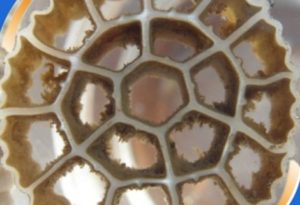
Luxurious bacteria “housing units ” are provided for this, called bio media, with rough surfaces to which the bacteria cling and procreate then die and are consumed in a never ending frenzy. Any sanitiser such as bleach or chlorine introduced at this stage will annihilate the bacteria colonies and the system will fail. A common issue in households who use chlorine based products in quantity.
This second stage has the fancy name of an aerobic bioreactor…in essence it is a big bucket with plastic bits and an air pump to keep the bacteria active. Of course its the finer details of this bucket arrangement that makes these systems extremely effective. All joking aside these systems are engineered precisely to enhance the system for maximum effectiveness. No guesswork comes into the design.
The third stage of the system is the sanitisation and bacteria de-activation stage where the now processed water flows over into a holding tank before being distributed to irrigation or washing systems . Chlorine or ozone is injected into the outgoing flow to kill and stop any further bacterial activity and to immunise the water for re-use . Ozone is an extremely effective sanitiser but has a very short life cycle especially in heat. The colder the water, the more effective the ozone, which once dissipated breaks down into oxygen and water . Unfortunately, ozone does not have the capacity to give an end to end protection needed for water reticulation systems. Ozone is a point of use method with no residual. This is why a chemical is the preferred method for reticulation lines. It stays active from point of administration to point of use and is then removed with filtration.
Most domestic carbon filters will remove chlorine from water . While chlorine is extremely good at killing bacteria it is also a known carcinogen. Research in the USA has directly linked high chlorine dosages or long term exposure to smaller doses to numerous forms of cancer . The longer you are exposed to chlorine in concentration above 3 ppm the more danger you are in. The chlorine used in water purification is not the same as used in swimming pools .
Waste Water Chlorine Demand
Very high dosages of chlorine are added to the outgoing processed waste water as the chlorine first reacts with the chemical content before it can react with the bacterial content. This requirement is known as the Chlorine Demand Calculation and the variables are as follows:
Plate count 1 ppm free chlorine per 440 cfu/1 ml
4 ppm free chlorine per 1 ppm Nitrate
0.7 ppm free chlorine per 1 ppm Fe
1.5 ppm free chlorine per 1 ppm manganese
COD – 6 ppm free chlorine per 1 Cod
BOD – 6 ppm free chlorine per 1 BOD
Magnesium 1.7 ppm free chlorine per 1 ppm Magnesium
Potassium 2.64 ppm free chlorine per 1 ppm Potassium
Only once this chemical demand has been satisfied can the excess chlorine start acting on the residual bacteria.
The difference between Grey Water & Black waste water processing
We have covered how domestic human waste water, (black water), is processed and often we are asked whether our systems can process grey water and that is yes. Septic systems by themselves should not be fed grey water as the bacteria development is insufficient to effectively process the grey water. The second stage aerobic phase is vital fro grey water
Because grey water lacks bacteria content to break it down, it tends to go toxic and stinky in a very short time, 3-8 hours. Unlike sewage processing which goes to an airless environment first, grey water must go to a super oxygenated environment as soon as possible.