Hard Water : Limescale
Kalk or limescale are very nasty but common problems in South Africa
and cause substantial damage to property.

It is not just the calcification on the outside that causes the damage but the
“settling out” of the hardness formed by layers of calcium and magnesium. This settling is known as precipitation and it is particularly bad in hot water.
The limescale builds up on heating elements, dishwashers, ice makers, geyser elements, kettles etc causing their lifespan to be dramatically shortened.
So many people have experienced the frustrations and expense of replacing these costly elements after 3 or 6 months when they should last years under normal circumstances.
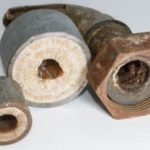
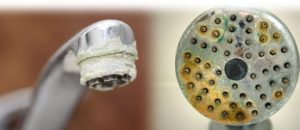
Every 1 mm of limescale coverage of a heating element requires an additional 15% extra power to produce the same amount of heat without the limescale, pushing up electricity costs and shortening the life of the element.
Hard water also makes it difficult for soaps and shampoos to lather, requiring much more of the product and making it expensive. Not mentioning the difficulty in washing clothes, mirrors, shower doors and other items such as motor vehicles. Spots appear on the metal making it very difficult to remove.
Limescale also stains porcelain and toilet bowls, sinks and other surfaces.
Getting rid of the effects with vinegar, acids , lemon juice and low ph chemicals is a long painful process and not very effective. The water is very healthy though – rich in minerals and calcium.
The Solutions to Hard Water / Limescale or Kalk
The options are water treatment or water softening. Lets cover the softening of hard water first.
Water Softener – removes Hardness
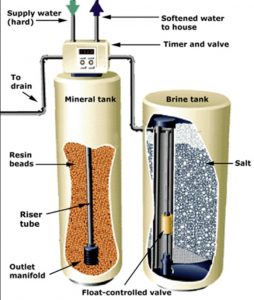
This process removes the chemicals which constitute the hardness namely calcium and magnesium by the process of installing a resin based filter.
The vessel that holds the media or special resin looks like a large gas bottle and it and its accompanying chemical tank are installed on the incoming water line to the home. To accurately determine how big this vessel should be and how much media it requires, a water analysis of the hardness done by a laboratory is required.
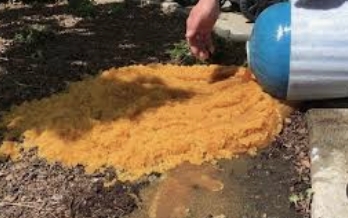
Inside the vessel is a very special resin, seen in the pic above, which allows the calcium and magnesium to “stick” to it until its saturated. In order to remove the hardness from the resin the media is regenerated using a special rock salt (NaCl). The vessel then back washes the hardness and sodium into the waste and rinses the resin bed, before going back into service again. Chloride is then released into the product water with the softened water.
This can cause health issues for people with heart problems or hypertension.
From the water analysis report the total hardness value is used in a calculation to determine how long the media will last before it reaches saturation point and has to be regenerated . This is computed on the volume of water used x hardness to give a factor of grains of hardness.
This calculation then also indicates how much salt has to be provided for the regeneration process. Without salt the system will become ineffective quickly. To be be most effective the system should be able to run without regeneration for at east 5 days. So usage and volume of water determine the physical size of the resin vessel and the amount of media in it x 1.75
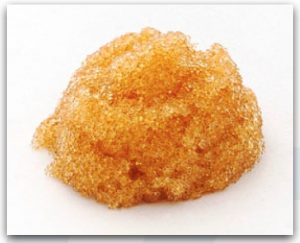
Most softener suppliers forget the resin bed expansion factor of 75% and the client then unknowingly end up with a substandard system. When the resin is dry it is hard and looks like small orange coloured beads. These absorb water when in the vessel and almost double in size and volume.
The result is normally a large vessel with a relatively small amount of resin but that’s the way it should be. Most suppliers simply compute the volume of resin required in the vessel…big mistake. It is always prudent to speak to an experienced water treatment specialist who has actual field experience.
These systems are usually pre-configured before delivery so that the regen cycle does not take place when you will be using water. The more they are set to regen , the more water they will use and the more salt will be needed.
|An average household of 4 people with medium hard water would need a system that regenerates every 5 days and uses approximately 25 kg of salt per month. You can expect a correctly sized system to cost you in the region of R12 000 ex vat including first bag of salt and auto control valve.
Once you have soft water you now also bear in mind that soft water is aggressive . Run the calculations through Langelier to determine whether the soft water has now become aggressive or not…you may need additional water treatment. I am sure you will agree that while a softener sounds like a good option it isn’t a easy option neither is it cheap.
Option 2: Softening Water with Water Treatment ( Highly Recommended )
There is a product on the market which is easy to apply and relatively inexpensive compared to a softener. It alleviates the frustrating and costly effects that hard water causes.
Benefits of Siliphos Polyphosphate Water Softening Treatment
- makes the water feel beautifully soft
- soap and shampoo lathers easily
- baths don’t stain
- electrical elements don’t break quickly
- residual spots are not left on glass or metal
- it doesn’t need electricity
- its inexpensive & easy to maintain
- its completely safe to drink and cook with
It is a food grade chemical that has been used by the water treatment industry for decades to protect piping against corrosion and where a salt based water softener has been banned, such as in California in the USA.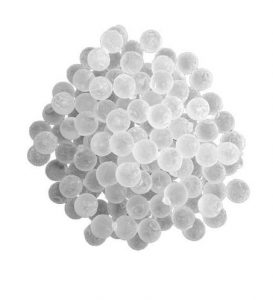 It is self regulating, which means it does not need human intervention unless to top up the levels. It automatically mixes at a specific ratio to hard water and keeps the calcium and magnesium from precipitating. The suspended hardness then forms a fine “jelly” or colloid which can optionally be removed by using a fine filter such as a Ultra Filter. In most cases the invisible colloid is left in the water and flushed out of the system naturally.
The most effective way of deploying the beads is in a cartridge inside of a filter housing which is then connected inline with the water supply.
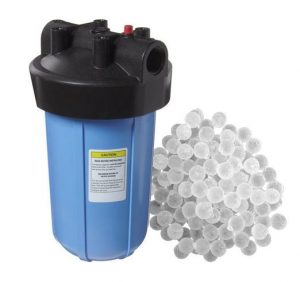
In order to calculate the correct housing size and quantity of polyphosphate it is necessary to estimate the water volume flow per hour in the household. it is best to use the peak demand figure but the average over 24 hrs is the normal calculation. to make it easier we have a chart below to help you. These indicate the initial weight of the media to be used for your requirement. Higher flow rates and heavier media will require different housings. Please call so that we can supply you with the optimum system.
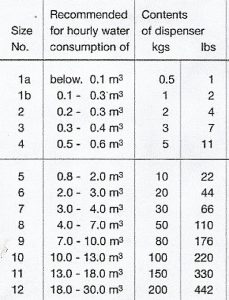
So lets say there are 5 people in the house using the national average water consumption per day of 200 liters each giving us a daily usage of 2500 liters.divide this by 24 hours and the average hourly consumption is then 105 lph.
Size number 1b on the chart matches that flow rate so you would need 1 kg of media . Please remember that the media uses up 3-5 parts per million of hardness so for reasonably soft water you could use 1 kg per 100 000 liters. Harder water would use up much more. It is best to test it and compute your own usage cycle.
We recommend this as the easiest and cheapest counter limescale / hard water treatment available. For the system shown above the initial cost for housing, refill cartridge and 1 kg is R1625 ex vat and the media is R249 ex vat per kg thereafter. Shipping is extra and we can quote that when you call us.
Installation is easy and most people can manage that without needing a technician or plumber. However, if you are all thumbs we can install at a cost or recommend a local handyman or plumber.
** A crucially important note please regarding limescale treatment media ….there are numerous media systems on the market with so called miracle media, whose media range in price per kg of R600 upwards…scalenet, evolet R1500 per kg , 1stop etc…they all suffer from the same problem…you cannot tank the treated water or the water reverts to hard and precipitates again. Scientifically proven..you will see that they mention tankless solutions in their advertising…this is why. Polyphosphate is the only media that keeps the hardness in suspension and does not allow the water to revert back.
[ecwid_product id=”174992569″ display=”picture title price options addtobag” center_align=1 version=2]
Email us your order now and we will ship it to you anywhere in South Africa
or call us on 081 811 8051 / +27 62 703 2738
Option 3: Softening Hard Water with Acid Dosing
This is our least favoured method but has its merits under special circumstances . If you have very high pH levels and very hard water with plastic or UPVC ,piping then this would be a good option for you.
Hydrochloric acid 30% solution is mixed into a chemical drum and injected into the water supply line at a pre-determined volume to break down scale build up and to reduce the ph levels. A water test is required so that an accurate and effective dosing can be injected that will not cause side effects to plumbing and fixtures.
A ph controlled dosing pump is required plus chemical tank and acid. Cost approximately R16 000 ex vat . Please do not implement this option without expert advice.
Call us on +27 81 811 8051 / +27 62 703 2738